
Share James W. Garner Sr.'s obituary with others.
Invite friends and family to read the obituary and add memories.
Stay updated
We'll notify you when service details or new memories are added.
You're now following this obituary
We'll email you when there are updates.
Select your format and elements to print

IN LOVING MEMORY OF James W. Garner Sr.
James W.
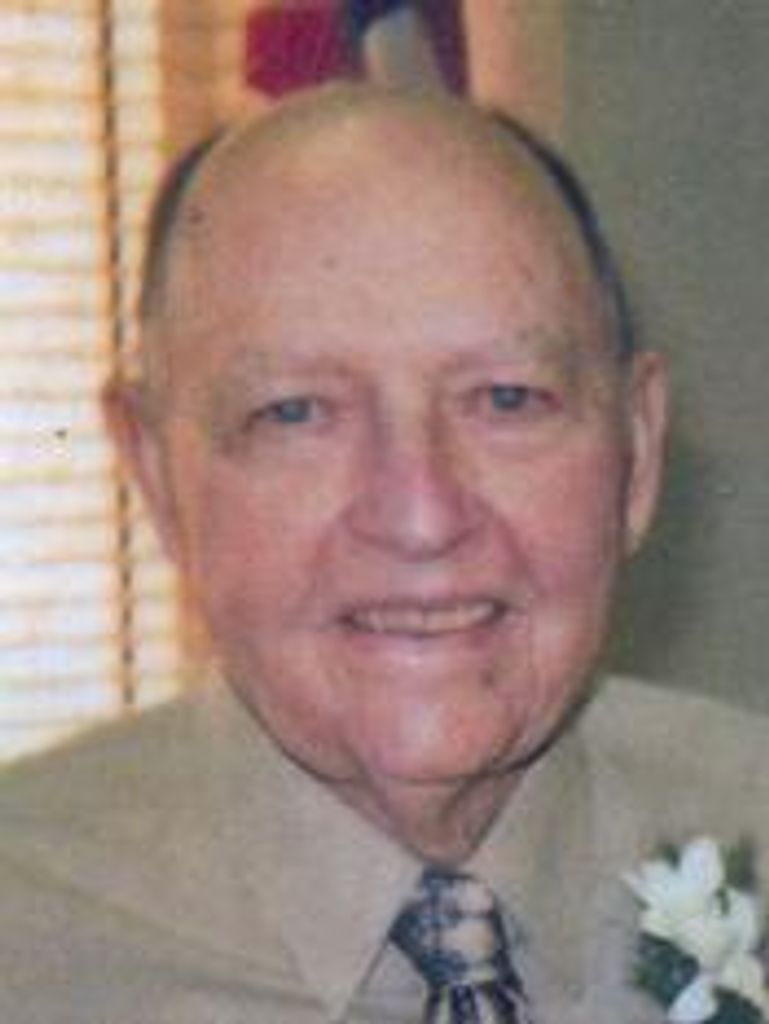
Garner Sr.
Jun 7, 1919 — Mar 13, 2013
James W. Garner Sr.'s Obituary
Remember When…. By Dobie Lane Garner My grandfather, James William Garner, Sr., also known as "Paw-paw," tells me his life story isn't very interesting. He doesn't think there is extraordinary information about him and his personal history. But when he told me about the Great Depression, World War II, and life on the farm, I disagreed, and I am sure many other people would, too.
James William Garner, Sr. was born June 7, 1919 at Williamsburg at the William's home where they lived at the time. When he was three years old he moved to a place on Rocky Creek and at that time people would buy turkeys at Ezzell on the Ezzell Road past his house and were drove to Hallettsville to Nolan's Produce killing plant to be slaughtered. They were assembled in large flocks at Ezzell and people walked to Hallettsville, because there were no vehicles at the time.
He went to school at Williamsburg through the 7th grade and walked and rode horseback. He lived about three miles from school. When he attended high school he lived in the Williamsburg community and rode with two neighbors to school one year and the next year rode horseback, which was about an eight miles long trip. He still managed to avoid any absences or tardies; he was always at school on time. He didn't participate in any sporting events which took place after school, although he said that the ride to school and back was enjoyable. During his senior year in high school his family bought a place at Mossy Grove (toward Ezzell), on the Lavaca River, and he rode to school with Sralik, Zeigler, Lorke, and Jansky children to school that year.
He started college at San Marcos and had enough money to pay tuition for one semester. He worked as a night clerk at a hotel for room and board. He didn't finish the semester at college, and he didn't receive any extra pay except for a place to sleep and food, and the food wasn't very good. He was needed at home to pick pecans and prepare crops, then. He stated that his only form of transportation then was "his thumb," meaning he hitchhiked to and from college. He later went to Houston and worked at a tin can company. He was laid off after the rush season as he was a newer employee and came home. In a week he hitchhiked back to Houston and found a job at the Rice Hotel. He stated, "The food was awful good, but the pay was awful slim." He had plenty of food to eat at home so he hitchhiked home. He hitchhiked back to Houston in a week to pick up his check and returned home well before dark that day.
He bought his first vehicle at the age of 22. After working in construction in Victoria, he left Victoria with $85 and hitchhiked to Houston. He was dropped off at the first used car lot and bought a '36 Plymouth and drove it back to Victoria and never had to hitchhike again.
During the Great Depression, his family had plenty vegetables, meat, milk, and other homegrown foods. Many people lost land and homes during the depression. At one point, cattle became so cheap that nobody bought them and the government started purchasing them. People gathered their cattle and someone with the government would come and purchase a good cow and calf for $18 and bought a fat cow for $12. He had a cow that weighed about 1200 pounds that sold for $12. An old cow would be bought for $12 and would only be shot and the meat was taken for free. Otherwise, the remains were burned. Cotton was one of the main money sources at the time. It was cheap and the government paid people to plow it. Then during the depression cotton got worse and everything went bad. His grandpa had some cotton before the Depression that could've sold for forty cents per pound but he held on to it and sold it later for only four cents per pound. His grandpa sold a piece of his land to a merchant with adjoining land and settled the agreement so he would still have most of his plot. He sold this land and sold cotton for four cents a pound. It was easy to borrow money after the depression to get started and Paw-paw did field work for fifty cents a day.
He married in August 1941 and worked at Port City Stockyards in Houston. During that December the Japanese bombed Pearl Harbor and the war began. He went to San Antonio to be inducted into the Army and was rejected on account of irregular heartbeat. He farmed and made a down payment on the land that he lives on today and paid it off in his first year of ownership. He was called back to the Army and reclassified and was inducted after he passed the second examination. He trained at Fort Hood, then he was sent to California, then to Seattle, Washington. He was scheduled to invade Nagasaki, but the bombs were dropped on Hiroshima and Nagasaki before he invaded. His ship traveled to Nagasaki and sat in the bay a few days, then was sent to Yokohama where they unloaded. He went in a convoy to a place called Takarzika. In Takarzika he was ordered to guard the 33rd Division Commander after a report of an air base to be attacked. He was given a gun he had had no training with and his chest was criss-crossed with bullets but he had no idea how to use the gun. He said, "I expect I would've got it goin' though!" Fortunately, he didn't have to use the weapon. He was taught how to fire anti-tank guns and M-1 rifles. Takarzika was also the opera center of Japan. He was then ordered to a signal battalion in Tsruni, then to Gotanda, which was near Tokyo and stayed there about a year. He said he had fun firing at moving targets with canons. He had to spend nearly a month at sea trying to dodge enemy submarines or anything that could cause harm. The first land he saw was a volcano. He said that miles of cities were just leveled and if he would have been sent in before the bomb was dropped he would have probably been dead. The people living there picked up tin and built something for shelter. They were dirty and starved and the only things standing were streets and masonry smokestacks from factories. He witnessed all these horrible sights by train. The terrain was beautiful, though, and the land was made of terraces all around where their ship landed. There were no trees.
He returned from Japan in September 1946. He didn't receive his discharge from the Army until he was home a couple of months. When he came home he bought twenty cattle and farmed peanuts, corn, and tomatoes. He raised chickens and turkeys and tried to purchase more cattle. He met Virginia, his first wife, in 1940. She lived in Speaks and went to Hallettsville High School for two years. He married Bessie Janota Neill on August 20, 1983, and is married to her today.
He always wanted to make a living out of cattle, and he bought a heifer every time he made a few bucks. He bought his first heifer for $16 at the auction in Hallettsville. She turned into a good milk cow. He says that the highlights of his ranching career were the six times he bought land. He says, "Save money and don't throw it away. Buy what you need and enjoy life as you go along."
Although he may not fully agree, I think my grandpa's life was very interesting. The Great Depression, World War II, and his daily life are events that I will probably never witness or experience. Even though all the stories are not pleasant, it is very interesting information and I believe many other people today would agree.
James is survived by: his wife Bessie; 3 sons, Richard C. Garner & wife Kathy of Hallettsville, James W. Garner Jr. and wife Tammy of Hallettsville, and Robert S. Garner & wife Alice of Victoria; daughter Alice Sue Hermes & husband Alton of Hallettsville; 3 step children, Bess Believeax, Jennie Hardesty, and Sam P. Neill III; 16 grandchildren; and 10 great grandchildren.
James was preceded in death by: parents; 1st wife Virginia Clark Garner; 2 daughters, Virginia Ann Cobb and Nancy Ann Neill.
Funeral Service:
2 pm, Sunday, March 17, 2013, at Kubena Funeral Home of Hallettsville.
Visitation:
4 pm, Saturday at Kubena Funeral Home.
Officiates:
Rev. Sheldon Johnson and Rev. Kenny Hodges.
Pallbearers:
David Wayne Cobb, Jay Ross Garner, Lawrence "Butch" Hermes, Bobby Dumbeck, Brett James Garner, Clayton Tyler Garner, Ian Rainer Beliveaux, and Nathan Cole Neill.
Honorary Pallbearers:
James "Jamie" Hermes, Patrick Hermes, Dobie Lane Garner, Trey Picard, John Thomas Hardesty, Joshua Burke Walker, and Sam Neill IV.
Memorials:
Mossy Grove United Methodist Church, Mossy Grove Cemetery, or Hospice of South Texas.
Burial:
Mossy Grove Cemetery.
James W. Garner Sr.'s Guestbook
Visits: 6
This site is protected by reCAPTCHA and the
Google Privacy Policy and Terms of Service apply.
Service map data © OpenStreetMap contributors